

Shooting
Simulation
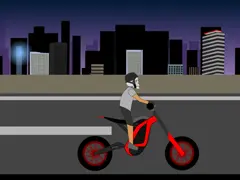
Master balance in Wheelie Life 2: hold long wheelies, avoid crashes, and unlock bikes. Score only while wheeling—keep it up to climb the leaderboard.
More games to drift through
Swap tabs in seconds and keep the momentum going with another arcade favorite.
Shooting
Simulation

Simulation
Simulation

Simulation
Racing

Action

Puzzle
Puzzle

Racing

Puzzle

Puzzle

Simulation
Puzzle

Adventure
Wheelie Life 2 invites you into a fast, physics-driven stunt space where your throttle hand and brake feathering decide everything. In Wheelie Life 2, the rule is simple: keep the front wheel in the air to gain points, touch down and the score bleeds away. That purity makes every meter you travel feel earned. Instead of scripted levels or checkpoints, Wheelie Life 2 focuses your attention on flow—maintaining angle, reading tiny bumps, and timing micro-corrections that turn a shaky lift into a silky long haul.
The world of Wheelie Life 2 channels real street stunt culture without clutter. You ride, you balance, you learn. The physics system rewards nuance: throttle adds torque, rear brake snaps the front down, and your stance changes rotation speed. Make a greedy input and you’ll loop out; hesitate and the wheel will kiss asphalt and start draining your score. Because Wheelie Life 2 measures only the moments you’re actually wheeling, the game teaches discipline—commit to the lift, commit to the line, and manage risk second by second.
Every session in Wheelie Life 2 is an open-ended skill run. You launch, find the balance point, then defend it against terrain ripples and speed creep. The closer you hover to that sweet spot, the less effort you spend on corrections and the longer the combo stretches. Drop both tires and the counter ticks backward, nudging you to pop up again immediately. Because Wheelie Life 2 ties your identity to consistency, you’ll feel real pride when a jittery five-second hop evolves into a minute-long glide.
Right Arrow is your throttle; Left Arrow is the brake that reins everything in. Up Arrow damps rotation, giving you a little breathing room when the angle starts to drift. On specific bikes, Down Arrow activates a trick for extra flair without inflating the core score system. Press M to toggle the menu. These bindings give Wheelie Life 2 a clean mental model: gas lifts, brake settles, and your timing stitches the two together.
Practice sets matter in Wheelie Life 2. Start by rolling gently, lifting the front into a low, safe angle. Use tiny throttle blips to rise, then tap brake to stop the back-over. Your aim is a floaty hover where you’re making micro inputs instead of panic saves. If you consistently slam brake, you’re lifting too hard; if you’re pogoing the front wheel on and off the ground, commit to a longer, smoother pull.
The scoreboard in Wheelie Life 2 only climbs while you’re actually wheeling. That design eliminates cheese and makes every point a stunt receipt. The longer you hold the angle, the more momentum you carry—and the more any mistake can snowball. Drop the wheel and you’ll watch digits slide away, a visceral reason to relaunch with better control. By tying value to airtime, Wheelie Life 2 turns balancing into a meditation: breathe, correct, extend.
Under the hood, Wheelie Life 2 treats your bike like a rotating body around the rear contact patch. Throttle adds angular acceleration; brake induces counter-rotation; terrain imparts perturbations you must absorb. Speed increases the sensitivity of tiny inputs, so a throttle tick that helped at 20 kph might pitch you up at 60. The practical lesson of Wheelie Life 2: the higher the speed, the smaller the moves.
Some bikes in Wheelie Life 2 unlock simple tricks that trigger on Down Arrow. Use them to style your line during a stable wheelie, not as a crutch. Since points derive from wheeling time, think of tricks as taste—like a head-tilt in a freestyle session—showing you’re calm enough to pose without losing balance. In Wheelie Life 2, swagger comes from control.
Ride well and you’ll open new machines in Wheelie Life 2. Each platform offers a slightly different feel: some lift eagerly and require surgical braking; others are composed, forgiving sloppy inputs but demanding patience. Rotating through the garage keeps practice fresh and builds a transferable skill set. When a previously twitchy frame suddenly feels tame, you’ll know Wheelie Life 2 has sharpened your senses.
New to Wheelie Life 2? Try this three-step plan. First, pop light lifts and immediately set down without chasing distance—just memorize the angle where the front floats. Second, start holding that angle for two beats, then three, using tiny brake taps to arrest rise. Third, link small holds into longer strings by managing speed: if velocity creeps, tap brake longer rather than chopping throttle. Over an evening, Wheelie Life 2 turns panic saves into smooth, predictable corrections.
Once you can hold ten-second glides, shift your focus in Wheelie Life 2 to exit control. Don’t slam the front down; land softly so the score drains less before your next lift. Aim to relaunch within a heartbeat, preserving rhythm. You’ll also start reading terrain ahead and pre-loading corrections: a small bump means pre-brake; a slight downhill means less throttle. Read, react, remain calm—Wheelie Life 2 rewards anticipation.
At a high level, Wheelie Life 2 becomes about micro-economy—using the smallest possible input to stay aloft. You’ll hover inches from looping yet never cross the tipping point. When you can glance at the environment rather than your front fender, you’re free to add tricks on bikes that support them. The best runs in Wheelie Life 2 look effortless because the rider is solving dozens of tiny equations each second.
Looping out? In Wheelie Life 2, you’re likely blipping too hard without a brake readiness plan. Assign one finger to brake mentally and think “lift-check-lift.” Dropping the wheel early? You’re under-throttling or over-braking—commit to a slightly higher initial angle and trust tiny corrections. Oscillating wildly? Reduce input size by half and train at lower speeds where Wheelie Life 2 gives you more time to react.
The best design choice in Wheelie Life 2 is scarcity: points exist only in the air. That scarcity amplifies meaning. A five-second hold carries story; a thirty-second glide feels legendary. You’ll chase that feeling run after run, not because the game dangles arbitrary rewards, but because Wheelie Life 2 makes self-improvement visible, measurable, and satisfying.
Right Arrow: Throttle • Left Arrow: Brake • Up Arrow: Slow rotation • Down Arrow (on supported bikes): Trick • M: Menu. Keep this mental card handy and you’ll spend more time wheeling and less time thinking. The clarity of inputs is why Wheelie Life 2 is easy to start yet deep to master.
Can I change bikes? Yes. As your scores grow in Wheelie Life 2, new rides unlock with distinct handling. Sample them to find your favorite balance point and response curve.
Do I need tricks to score? No. In Wheelie Life 2, tricks are optional style. Your score comes from legitimate front-wheel airtime. Focus on stability first; add flair once you’re calm.
What happens if I stop wheeling? The counter shrinks. Treat the touchdown as a cue to relaunch smoothly. In Wheelie Life 2, minimizing dead-ground time is a key mid-game skill.
Are all bikes trick-capable? Only some. Explore the garage in Wheelie Life 2 to learn which platforms support trick inputs and which are pure balance tools.
If you crave a clean challenge where practice converts directly into progress, Wheelie Life 2 is your arena. Lift, hover, correct, and stretch the line a little farther every attempt. When the scoreboard freezes on a new personal best, you’ll know every digit was earned the hard way—in the air, with poise. Fire up Wheelie Life 2, chase the balance point, and write your stunt story one immaculate wheelie at a time.
Need help with Escape Drive? Visit the Help Center or contact us through the support page.